Saturday, September 30, 2023

Saturday 9/23/2023 – The Circle Continues

This morning began with my morning walk, just like almost every other day since May of 2022! Our first of two “big” events today occur at 10am. We will walk in the footsteps of country music’s superstars and get an exclusive look at what happens behind the scenes of the show that made country music famous on our backstage tour of the Grand Ole Opry House.


We enjoyed pictures outside of the Opry first! This is a picture of the staff for this 2023 American Mountain Music tour.


The tour begins with a state-of-the-art theater experience with music, special effects, priceless archival footage, and superstar hosts Garth Brooks and Trisha Yearwood.


We stood under over $90,000 of Gibson guitars. This feature was specially designed for the Grand Ole Opry.


There are life size pictures of the stars everywhere!


We toured the artist entrance, where stars walk into the world-famous Opry House every night, and learned about the significant pieces of art and traditions.

We stood at the security desk, where every artist check-in. Each member has a mailbox, and you can send them mail. You don’t even have to know the zip code, or so our tour guide claims!

We could run our fingers over all the plaques that the Grand Ole Opry members install themselves when they are inducted.


Next was a glimpse and some information about the many dressing rooms that the stars use. 


We went backstage and even on stage and stood in the circle!

We had free time until our dinner at the Aquarium and the Saturday night Grand Ole Opry show. 


The Aquarium is a restaurant that surrounds a large fish tank!

The Grand Ole Opry is the stage that showcases country music's past, present, and future. They have been home to country music for over 96 years. In 1925, a radio-loving founder of National Life and Accident Insurance Company convinced the company to launch its own radio station: WSM – named after their slogan “We Shield Millions." WSM went live for the first time on October 5, 1925.

George D. Hay launched the WSM Barn Dance with Uncle Jimmy Thompson, a 77-year-old fiddle player, on November 28, 1925 – widely known as the day the Grand Ole Opry was born. In December of 1927, following an NBC broadcast of Walter Damrosch's Music Appreciation Hour, George D. Hay proclaimed on-air, "For the past hour we have been listening to the music taken largely from the Grand Opera, but from now on we will present the Grand Ole Opry.” The new name for the WSM Barn Dance stuck.

Roy Acuff opened the first show in the new 4,440-seat Grand Ole Opry House with a performance of "The Wabash Cannonball.” President Richard Nixon was in attendance and lead the Opry audience in singing "Happy Birthday" to First Lady Pat Nixon. The night featured a packed lineup, so each artist was limited to performing just one song.

The Opry House gave the show more space and the facilities necessary to grow and evolve. It was televised live for the first time on March 4, 1978, as part of a PBS fundraising special, but the show wouldn’t start regular television broadcasts until 1985. The Opry family began welcoming more giants like The Gatlin Brothers, John Conlee, Ricky Skaggs, Lorrie Morgan, Reba McEntire, Randy Travis, and Patty Loveless.

The 1990s brought some of the Opry’s most monumental moments: Minnie Pearl and Jimmy Dickens celebrated their 50th anniversary with the show; Roy Acuff made his final Opry performance, one month before he passed; Charley Pride, Garth Brooks, Alan Jackson, Vince Gill, Emmylou Harris, Martina McBride, Diamond Rio, and Trisha Yearwood were all welcomed into the family.

Throughout the 2000s, the show and its cast paid tribute to fallen members Hank Williams, Waylon Jennings, and Minnie Pearl. In 2002, the Opry celebrated its 4000th consecutive Saturday Night broadcast. And the family continued to grow, adding Brad Paisley, Dierks Bentley, Trace Adkins, Carrie Underwood, and Montgomery Gentry, among others.

In May of 2010, the venue was ravaged by a historic flood that forced the Opry House to close its doors for five months for restoration. The show pressed on at other venues across Nashville, including two former homes: War Memorial Auditorium and the Ryman. The Opry House was beautifully restored, and the show made its triumphant return on September 28, of that same year.

The Grand Ole Opry celebrated 40 years at the Opry House on March 16, 2014, with an all-cast opener led by Old Crow Medicine Show, and performances by some of country music’s biggest names. In 2015, the show celebrated its 90th anniversary with a star-studded weekend-long birthday bash. The 2010s brought Blake Shelton, Keith Urban, Darius Rucker, Old Crow Medicine Show, Little Big Town, and more into the Opry family.

In March of 2020, COVID-19 forced the Grand Ole Opry to make the hard decision to temporarily cancel live audience shows. In a historic moment for the Opry, the Saturday Night Grand Ole Opry broadcast live without an audience, via Livestream. The show continued to broadcast live on WSM Radio and Circle TV, which incidentally launched in January of 2020 – keeping the music playing and the circle unbroken.

After seven months of performing without a live audience, in October of 2020, the Opry kicked off its 95th anniversary by welcoming back 500 guests to the Opry House – and so began a month-long celebration of the Opry, country music, its artists, and its fans. The Opry family continues to grow, with Rhonda Vincent, Lady A, Carly Pearce, Lauren Alaina, and many more inducted in the last few years.

Our show included some great performances by seasoned Opry members and 2 entertainers having their Opry debuts.

Our opening act was the Opry Square Dancers. They have been a Saturday night Grand Ole Opry tradition since 1952. This troupe of dedicated square dancers has performed every week at the top of the Saturday night show and following intermission. The Opry Square Dancers’ distinctive style of clogging is rooted in Southern Appalachian culture, and they are a crowd-favorite.

Riders in the Sky was up next. Back more than 40 years ago when they first started playing together, there were no laptops, no cell phones, no Google, Apple, or Microsoft. No texting, tweeting, or Ubering. It truly was a different world. 

But there were three young men with drive and wit who wanted to keep a special music alive. They believed in preserving the heritage of Western Music and presenting it to a new generation. They believed in entertaining, and they did so… entertaining themselves as well as the audience! And they believed in creating original Western Music to continue the tradition, not just seal it in amber as a museum piece. What they did not realize at the time was that they would be doing the same thing 40 years later.

Riley Clemmons was on the Opry stage for the 2nd time tonight. She grew up singing in church and performing around town but was discovered at a high school talent show. She signed with Capitol CMG Label Group and released her debut single, "Broken Prayers," at the end of 2017. The song quickly found its way onto the Billboard Hot Christian Songs chart. She is a rising artist from Nashville, TN who has accumulated over half a billion global streams and 85 million YouTube video views.

Making his Opry debut was Sam Barber. He is from a farm in a small town in Southeast Missouri. Music had not always been his passion. In fact, he was the kid that never participated in music class or music performances. His music journey was completely unplanned and his success continues to astound him. When he was 16 he picked my great grandfather's Gibson guitar. It was out of tune and had with 5 strings. He fell in love with the art of playing. He soon found his voice and started to sing along. Making his way to his Opry debut!

Our other Opry solo debut was RVSHVD (pronounced Rashad) whose, real name is Clintarius Rashad Johnson. He started out studying the music of Lil Wayne, Eminem, and Tupac before becoming a self-taught R&B singer. It wasn’t until he discovered a track by Keith Urban did he fully realize that country music was for him, and this led him down a different path, allowing him to infuse the R&B style that he had come to know, into his new-found love of country music. In doing so, he’s created this whole new path and is continuing to show the world that music is for everyone regardless of genre. His music just proves that combining country with black influences is not only innovative but also inspirational.

After the intermission, we enjoyed another dance by the Opry Square dancers. Followed by Opry Member, Charlie McCoy. He has been a mainstay in Music City since the '60s. He has played on dozens of hit records, including work with such legends as Elvis Presley, Johnny Cash, Dolly Parton, Simon and Garfunkel, George Jones, Bob Dylan, Roy Orbison and many more. The solo work of this Country Music Hall Of Fame member is contained on more than three dozen albums that Charlie has released over the past four decades. His harmonica playing is second to none!

Ashley McBryde was our next Opry member to perform. She grew up in Arkansas and she was drawn to various types of music from a young age. She also developed a passion for writing songs and later moved to Nashville to pursue a music career.

Between 2006 and 2011, McBryde released a pair of self-released albums. Her 2016 release drew attention from country artist Eric Church. His support helped her gain a country music recording contract with Warner Music Nashville. 

In 2017, both her album and her single received critical acclaim and led to recognition from several music associations. It was followed by 2019's Never Will, which was also met with critical acclaim. Its lead single "One Night Standards" reached the top 20 of the American country songs chart and topped the Canadian country survey. She has received one Grammy Award from six nominations, one Country Music Association Award, three Academy of Country Music Awards, and was nominated for a Daytime Emmy. She earned one of country music's crowning achievements when she was invited to become a member of the Grand Ole Opry by Garth Brooks and was subsequently inducted by Terri Clark on December 10, 2022.

The Cleverlys were our final act. They are a one-of-a-kind, unique comedy and music experience. From the group’s humble beginnings in the Ozark Mountains, to currently headlining festivals and PAC's all over the country, even performing regularly on the coveted Grand Ole Opry stage. One thing is for certain, there is no other show like this out there. 


They told us that "If Dolly Parton, Earl Scruggs, and Spinal Tap spawned a litter of puppies, it would be The Cleverlys."


It was a great day and an awesome night of entertainment!

Wednesday, September 27, 2023

Thursday 9/21 & Friday 9/22/2023 – The Circle Continues

The wagonmasters and us spent the day getting the final touches ready for our American Mountain Music Tour guests. We are staying at the Nashville KOA.

Nashville is a corporate KOA. The general manager is TJ Hayduke and he started his career near our home in Florida. He was at the St. Petersburg KOA Holiday before becoming a General Manager at the Louisville South KOA Holiday, then moving onto Nashville. Charlie and I enjoyed visiting with our caravanners as they were arriving. It’s going to be a great tour!

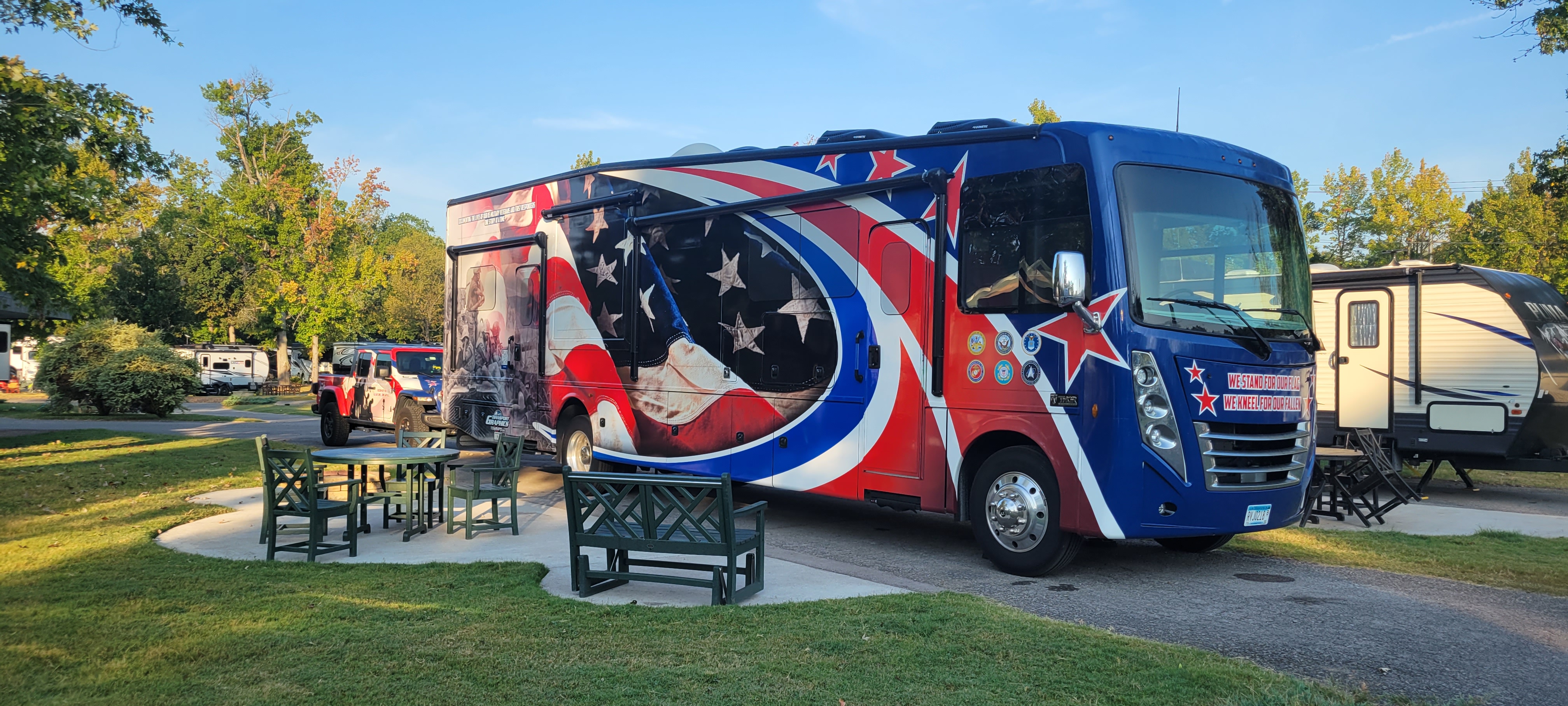
In the campground is a unique RV. Take-A-Vet Fishing is the non-profit! Since it's inception in 2011, Take-A-Vet Fishing has taken over 3,500 veterans fishing.

Friday morning was our last few minutes to finish up and be ready for our caravan to begin. We start all Yankee events with a welcome that includes traditional Root Beer Floats. We make them in a red solo cup with a generous scoop of vanilla ice cream and your own can of ice-cold root beer. Included in every root beer float is an extra wide straw and a long-handled spoon. It is also known as the “Black or Brown Cow.” The root beer float got its start in Colorado in a mining camp. Frank J. Wisner of Cripple Creek, Colorado, gets the credit for inventing the “Black Cow” way back in August of 1893.

At our welcome gatherings, we learn a little bit about all of our caravanners. But we will learn more over the next 15 days. As, we ask each caravanner to submit a 3x5 card with a “little known fact” on them. Then we read them and other caravanners guess who they think it is. Finally, the owner of the little-known fact stands and tells “the rest of the story.” 

We enjoyed our welcome dinner at Paula Deens Kitchen. It is a southern-inspired eatery, with mouth-watering dishes created by Paula Deen and her family. It’s located in a stunning 17,000-square-foot building that seat 406 guests. It is located along the banks of the beautiful Cumberland River, adjacent to Opry Mills Mall.

Like Paula Deen, Yankee RV tours understands the values of spending time with family and friends sharing a meal together. We were invited to feel at home while we enjoyed some genuine Southern hospitality and family-style dining. 


We dined on endless portions of classic recipes, including signature dishes such as Paula’s Southern Fried Chicken and Ooey Gooey Butter Cake.

A great first day of our Yankee Adventure!

Sunday, September 24, 2023

Tuesday 9/19 & Wednesday 9/20/2023 – The Circle Continues

We enjoyed our first full day at Anderson Road COE. It is one of the smaller Corps of Engineer parks we have been in, but it is well maintained, and our site is perfect!

I enjoyed my morning walk around the loop and out to the main road and back a few times to get it all in

We took a route recon to the KOA, just to show Mary & Jerry where it was and what it looked like. We made a trip to Best Buy to return and item and stopped to make purchases at the Auto Parts Store. We made a stop at a show shoe, looking for Ecco shoes. No luck! A quick Wal-Mart run and then back to the campground to relax!

Wednesday

I enjoyed my morning walk and the sunrise cooperated and gave me a beautiful sight to see!

Today, we moved from Anderson Road COE to the Nashville KOA. It was a long run, 16 miles to Nashville KOA. 

We had to be out of the COE by noon and check-in is not until 3pm at the KOA.

We took the opportunity to wait in the Opry Mills parking lot, and shopped for shoes at Ecco with Mary.

We arrived at KOA and got set up in our home for the next 6 nights. Met up with Wagonmasters, Tony & Barbara, and we started our final preparations for the tour. We enjoyed a nice dinner at the Santa Fe Cattle Company.


Wednesday, September 20, 2023

Monday 9/18/2023 - The Circle Continues

We departed Goat Island Brewing in Cullman Alabama for our drive to Anderson Road COE outside of Nashville. The hospitality of these folks was truly special. They made us feel like family from the minute we walked in the door! We will stop again, when we are over this way! I completed my walk in the industrial park that the brewery is in. It was not scenic, but it was efficient! 

We took US 31 N into Hartselle, because we had to be out of the Harvest Host by 8:30am, so we went to a Walmart parking lot to have breakfast and pick up a few items.


You can certainly see the German influence in Cullman! Everywhere they are getting ready for Octoberfest!

Hartselle is included in the book The 100 Best Small Towns in America. It is the birthplace of novelist and journalist William Bradford Huie. It is also infamous for a progressive US congressman and senator John J. Sparkman. For its connections to Huie, the city is a stop on the Southern Literary Trail. What trail? The Southern Literary Trail is the first tri-state literary trail in the US. It celebrates acclaimed 20th century writers and playwrights of Mississippi, Alabama, and Georgia. You can follow it for a journey of discovery to the places that shaped and inspired these writers and playwrights. The Trail is a non-stop literary celebration with events, programs, and exhibits taking place at Trail sites throughout the year.

The next big town on US 31 N is Decatur Alabama. The old Decatur Historic District dates back to the town's settlement in 1817. In the beginning it was called Rhodes Ferry Landing after Dr. Henry W Rhodes, an early landowner who operated a ferry across the Tennessee River. In 1820, President Monroe directed the town be renamed Decatur in honor of Commodore Stephen Decatur after the naval hero was killed in a duel earlier that year. Official incorporation took place in 1826. The Old State Bank, on the edge of downtown, is the oldest bank building in the State of Alabama, being 190 years old. The first wave pool in the United States was built in Decatur and is still in operation at the Point Mallard Aquatic Center.

On Route 31, we came into Athens, Alabama. First thing I thought of was the bulldogs, but that is Athens Georgia! Oooooppps, this is Roll Tide territory! The first settlement came in 1807. Robert Beaty and John Corriel obtained the first land grant, getting 160 acres from the land office in Huntsville. The area continued to flourish and draw more settlers, and by 1818, Athens was an incorporated city before Alabama became a state. Athens is home to three governors, William Wyatt Bibb, Joshua L. Martin and George S. Houston. Founded in 1822, the state's oldest institution of higher education, Athens State University, is in Athens too. Athens boasts a number of historic buildings and residences. Originally an agricultural community, Athens has evolved into a major center of technology in North Alabama.

We turned onto US 72 and crossed the Tennessee River on the "Steamboat Bill" Memorial Bridge. They are two bridges that span one of the widest points along the Tennessee River. The river begins upstream of Knoxville, Tennessee and flows 652 miles south then west across northern. It is the largest river system that passes through the state and is one of the only rivers whose course enters and leaves a state at more than one point.

Along US 72, we got stuck in a bit of traffic and it was right in front of Doomsday Paintball. What an ominous looking place! I learned that they have paintballs, airsoft, and during Halloween they create a unique “doomed town.” This Halloween haunt takes place in an old war-torn town, located somewhere deep in the woods that was quarantined by the government after a large nuclear explosion was thought to have happened many years ago. Unfortunately, the locals had no clue what was coming, and before they knew it, the military set up massive fences & nets around the entire area, to control the radioactive fallout damage. 

According to the last known people living outside the quarantine zone, this extreme event caused the local townspeople to be forcibly cut-off from the outside world for nearly 70 years, making them very unpredictable and unwelcoming. It is thought that their descendants may still inhabit this area – but be warned that few people that have dared to go looking for this forsaken town has ever lived to tell about it! There was a cool Lincoln Town car painted in patriotic colors. The condition reminded me of one we rode in Amarillo to go from the campground to The Big Texan restaurant.

We skirted Huntsville, Alabama. It is home to technology, space, and defense industries and have a major presence here with the Army's Redstone Arsenal, NASA's Marshall Space Flight Center, and Cummings Research Park. It’s been years since we have been to Redstone, but it’s not on the route, so no stopping! We turned back onto US 231 N, the road we spent most of the other day on. We crossed the from Alabama into Tennessee on this route.

The first “big” town was Park City. It turns out, it is not a city, just a tree lined suburb of Fayetteville, Tennessee. The name "Fayetteville" was chosen in honor of the many settlers who came here from Fayetteville, North Carolina. The first church in Fayetteville was the Presbyterian Church, known at the time as the First Church of Fayetteville. It was established in 1812. One of the most famous landmarks of Fayetteville is the remains of the Stone Bridge, commonly known by the locals of Fayetteville as the “Old Stone Bridge”. It was in 1860 that John Markum and Patrick Flannery, the architects and contractors, began the building of the bridge.

This route on US 231 was a beautiful representation of the rolling hills of Tennessee. But, I would rather have these hills than the whoosh, whoosh of the tractor trailers passing you in the interstate. Travel is about the journey and not just the destination.

We stopped at the Walmart in Shelbyville for our last break before arrival. Shelbyville was established in 1810 on 100 acres of land donated by Clement Cannon (1783-1860), local manufacturer and veteran of the War of 1812. The city was named in honor of General Isaac Shelby (1750-1826), statesman and noted Revolutionary War hero who led colonial forces to victory at King's Mountain. Rich in both cultural history and natural beauty, the town is known worldwide for the annual Tennessee Walking Horse National Celebration, a prestigious equestrian event dating back to 1939.

Murfreesboro’s name carries a unique history. Originally called Cannonsburgh in tribute to Tennessee politician Newton Cannon, the city underwent a name change to honor Colonel Hardy Murfree. However, “Murfreesboro” can be a bit of a tongue-twister, so it’s commonly affectionately referred to as “The ‘Boro” by the locals, a more succinct and friendly nickname. Murfreesboro is home to Middle Tennessee State University. Stones River National Battlefield and Cemetery. County seat of Rutherford County.

We arrived at Anderson Road Campground is a lakeside oasis in the green hills of Tennessee. It is our home for the next 2 nights!


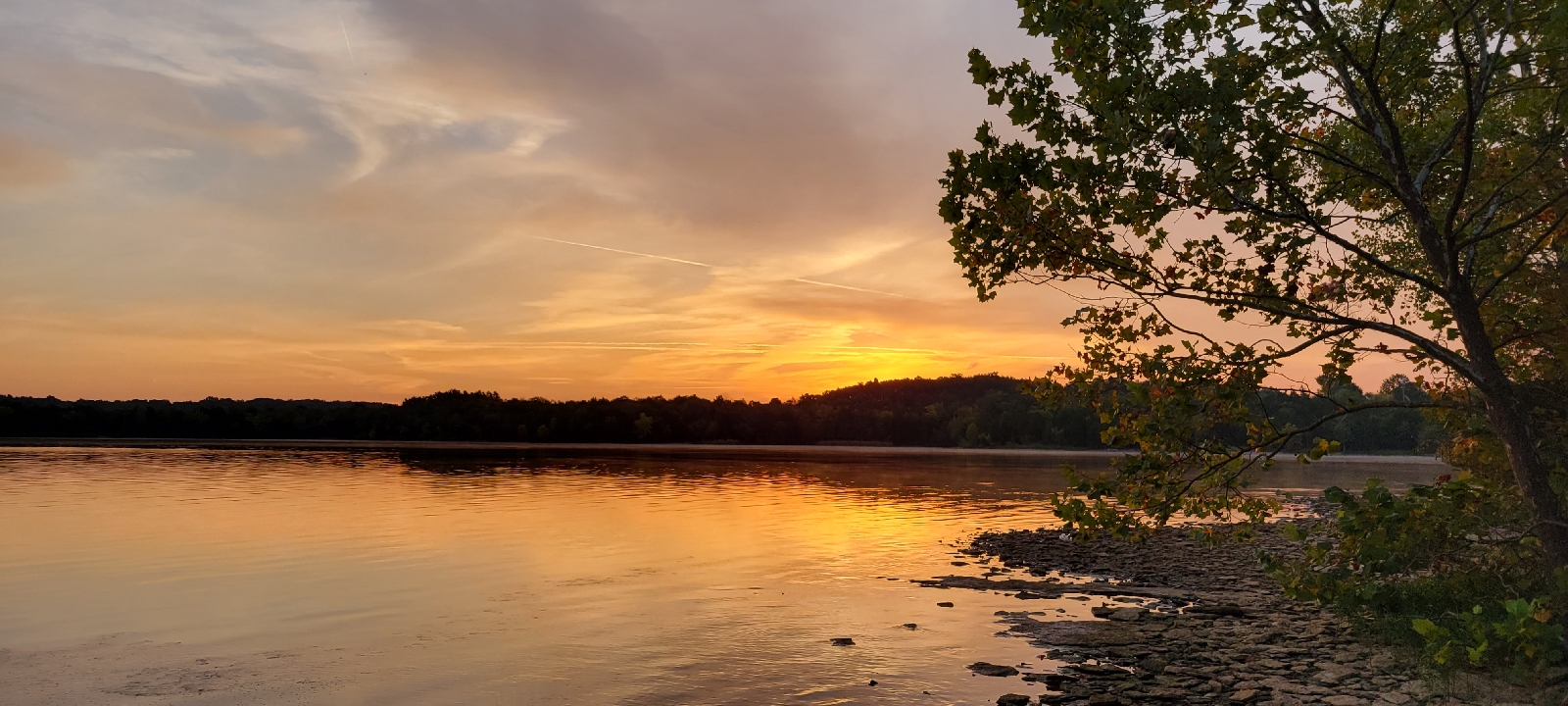
God did not disappoint, he gave us a glorious sunset!

#TwoLaneAdventures

Monday, September 18, 2023

Sunday 9/17/2023 – The Circle Continues

We departed Gunter Hill for our drive to Goat Island Brewing for our overnight stop. We took US 31 to US 80 to US 231. We stayed on US 231. The first big town we came to after we skirted on the south side of Montgomery was Wetumpka. It is located in what is called Alabama's River Region. Wetumpka is a quaint, small town with a big history. In 1834, the city of Wetumpka was incorporated, eventually becoming the seat of Elmore County. But long before its official incorporation, Wetumpka played host to a range of significant events.

What many don’t realize is the hills not only indicate the end of the Appalachian foothills, but some are actually the outline of “Alabama’s greatest natural disaster!” Roughly 80 million years ago, when most of the area was covered by the edge of an ocean, marine reptiles inhabited the water and dinosaurs lived on land nearby, a crater was created by a meteor blasting deep into bedrock under a shallow sea. The hills east of downtown are the eroded remains of the rim of the Wetumpka Impact Crater, almost five miles wide! It is one of only 200 world-recognized impact craters. This unique feature lends to the city’s nickname as the “city of natural beauty.”

From war heroes to movie backdrops, Wetumpka has also served as the staging place for many famous events, including conflicts during the French and Indian War, as well as the Creek War phase of the War of 1812. Fort Toulouse/Fort Jackson stands as evidence of this today and hosts many events, including some of the largest living history events in the state. And while truth is sometimes stranger than fiction, cult classics like “Big Fish” and “The Grass Harp” were all filmed in this picturesque city.

Home Town Take Over is an HGTV series with Ben and Erin Napier. HGTV received more than 5,000 submissions, representing 2,600 towns from around the country. They selected Wetumpka because, despite hardships, natural disasters and unexpected setbacks, the community’s undying spirit and resilience showed that they were ready to kickstart a comeback with HGTV’s help. HGTV showcased 12 major renovations all over Wetumpka, including restaurants, shops, historic homes, public spaces, a new farmers’ market—and even an entire downtown street—with the goal that the impact will ripple through the community for generations to come. According to all I read, it certainly has!

Located on Hatchet Creek, Rockford was known originally as Lexington, but the name was changed to Rockford in 1835. An effort was made to move the seat, but Rockford retained its status, being selected over Nixburg and Wetumpka in May 1840. In 1906, the courthouse was renovated and has since been restored since then. Later in the twentieth century, the textile industry became a major employer for residents, particularly Avondale Mills. Avondale established a plant in Rockford and plants in Sylacauga to the north and Alexander City to the east. The Rockford plant closed in January 2008, and Avondale went out of business shortly thereafter. Since 2008, Rockford has heavily depended on their abundance of natural resources calling to outdoor adventure seekers and tourists to keep the town alive.


On US 231, there is a “milk carton” between Rockford and Sylacauga. It was once the site of Dark’s Dairy, opened around 1946 by Lillian and Ruben Dark. The dairy operated until the 1980s. After that, the block structure fell into disrepair. But now, the block structure has been restored. It’s great to see communities pull together to save and restore unique landmarks. I love seeing gems like this on our two lane adventures!

Long known as "The Marble City", Sylacauga sits above a solid deposit of the finest marble in the world. Some of the most beautiful buildings in the country have been constructed and/or ornamented with Sylacauga marble. If you’ve ever visited the Lincoln Memorial in Washington, DC and stared up at the marble ceiling, you’ve seen a piece of Alabama history. The ceiling is made of white marble mined in Sylacauga.

In addition to lending its natural treasure to some of the nation’s most notable buildings, Sylacauga also holds the title for having the longest deposit of marble in the world. The bed of stone runs 32 miles long, a mile and a half wide, and more than 600 feet deep. The marble found in this quarry is especially desirable for two key characteristics: its purity and its durability. When paired together, these distinct qualities make Alabama marble some of the most desired in the world for large-scale buildings and monuments, as well as homes and sculptures. In 1969, marble was named Alabama’s state rock.

What is now Sylacauga was first mentioned in Hernando de Soto's records in 1540, yet the first settlers in the Coosa River Valley were the Creek Indians. The village of Chalakagay was built by Shawnee Indians in 1748, and the name Sylacauga is a derivative of the Indian words Chalakage, which mean "The Place of the Chalaka Tribe". Established in 1834, the city was first incorporated in 1838 as Syllacoga and again in 1887 as Sylacauga.

Our next town was Childersburg, it’s claim to fame is it is the Oldest Continually Occupied City in America, dating to 1540. The city’s beginnings date back to Coosa, a village of the Coosa Indian Nation that was in the area. Childersburg is billed as the oldest settlement in the nation, predating even St. Augustine, FL. That's because the area was visited, and its location recorded in 1540 when explorer Hernando De Soto made a rest stop during an early expedition. At the time, the area was a village settled by Coosa Indians.

The area that became Blountsville was settled as early as 1816. Initially called Bear Meat Cabin after the home of a Creek Indian, the town became a popular stopover for the many settlers streaming into Alabama after the Creek War of 1813-14. In December 1820, Blountsville became the county seat of newly created Blount County, a distinction it held until 1889, when the county seat was moved to Oneonta. By 1860, some five major roads ran through the town. The first school in the county, Blountsville Academy, was built in the town sometime before the Civil War. It was replaced by Blount College in 1890.

In Blountsville, we started to head west on AL 47, AL 51 and AL 91. Which brought us back onto US 31. Yes, the same route we had started the day on south of Montgomery! Our final destination for today is in Cullman Alabama. Cullman was founded by Col. Johann Gottfried Cullmann, a German refugee from Bavaria. He came to America in 1866. While working at a bookstore in Cincinnati, Ohio, he began formulating ideas of a special colony of working people. Specifically, a place for immigrants from countries such as his native Germany. He read about the vast unsettled lands in the South, and bought passage on a boat to Florence, Alabama. There he met with Governor Patton and presented his idea. The Governor furnished men and horses for him to explore available lands in North Alabama.

He finally met with Lewis Fink, the land agent for the great South-North Railroad, which had just built a line through the wilderness from Decatur to Montgomery. He contracted with the railroad for 349,000 acres with the stipulation that Col. Cullmann would pay for all advertising of the land and other expenses incurred in bringing the desired immigrants to the area. Col. Cullmann found the area to be perfect for his dream colony. Cullmann then went back north and began to advertise for colonists. In April of 1873, the first five families came by train to the spot where Cullman now stands. Each was allotted a plot of ground. The colony quickly grew, with American citizens and German immigrants moving to the area. In the middle of 1874, an election was held to incorporate the town. With thirty votes cast, there were twenty-three for incorporation and seven against. It was also decided that the town would be called “Cullman” after its founder, but with only one “n.” For the next twenty years, Col. Cullmann was instrumental in the growth of Cullman and Cullman County. He would bring in groups of settlers, sell them land, and then use that money to send back to Germany for more settlers. Between 1871 and 1895, Col. Cullmann brought more than 100,000 immigrants to the South from Europe and other parts of the United States.

April 25-28, 2011, saw a super outbreak of approximately 350 tornadoes produced by a single long–term event of related systems from Texas to Virginia. Of those storms, 199 occurred in one 24-hour period on April 27, which included 62 in Alabama. Between 5:48 a.m. and 7:13 p.m. on April 27, 2011, Cullman County was struck by four tornadoes ranging from a tiny EF-0 to two massive EF-4 storms. It was this day that Cullman, Alabama was turned upside down by a tornado. 

While devastation hit hard, something was brewing in the midst of destruction. Actions related to the rebuilding after the storm set in motion a series of fortunate events. An old high school friendship was rekindled and the passion for making good beer was sparked. Their two brew masters had a solid reputation of home brewing, designing new beers, and perfecting the American and German classics. When the two began to collaborate and brew together, magic happened, and synergy took their beer recipes to a new level. They like to call it a true “brewmance.” 

Behind the scenes stood the rest of the "brew crew." The full crew includes a rocket scientist, a geologist, an insurance agent, and a cop. What started out as a dream has become a reality. New beer has been created, dreams were fueled, and the birth of something this town had not seen since the 1800s: a brewery. 

Goat Island Brewing was established in early 2015 on a foundation of friendship and a firm belief that it is never too late to go after your dream. I love their references to “old goats” and their slogan of “Life is too short to drink baaad beer!”

Their annual Oktoberfest is next weekend, but preparations have already begun!


We are spending the night at their infamous Goat Island Brewing, a Harvest Host site. We love to stay at Harvest Host locations, because you get to interact with the business owners and enjoy some great hospitality!

We did enjoy some great beers and Mary had wine. Since they don’t serve food, we ordered in from Marco’s. Pizza for Gerry & Charlie and salad for Mary and me. We also played some Singo. We had fun, but we certainly need to learn more music if we ever hope to win!


Our sites for the night were nothing fancy, but they were quiet, safe and secure!

See you tomorrow as our #TwoLaneAdventure continues!