Tuesday, July 29, 2014

Heading West With No Destination In Mind - Part Five

When we departed the Spring Valley Frontier Campground in Waynesville, we went by the tallest corn I have ever seen. I wish there was a place to pull over to take a picture … I am sure the corn was seven feet or taller! Across the street was the most beautiful patch of sunflowers … there must be something in the water here! We got back onto 42 heading south and went by Rivers Edge Outfitters. It is an outdoor adventure family business on 45 acres of riverfront property. It is along one of the least crowded and most secluded sections of the Federal and State Designated Scenic Little Miami River.
A little further down 42, we came across a cow tied to a fence … why was the cow tied to the fence you ask? We asked the same thing … the cow was an oversized statue of a cow, I really doubt it was going to wander off, but just maybe?!

Just off of 42, you can head to Caesar Creek State Park. The park is leased by the State from the U.S. Army Corps of Engineers, who in the 1970s erected a dam on Caesars Creek to impound a 2,830-acre lake. The total park area, including the lake, is 7,941-acre. The park offers guests 43 miles of hiking trails and 31 miles of bridle trails. Caesar Creek State Park is highlighted by clear blue waters, scattered woodlands, meadows and steep ravines.
We passed by the Red Stewart Airport and Sky Dive Warren County. It made me think of our own Sky Dive City in Zephyrhills. We are lucky to be able to sit at our home and watch them jump every day! In 1960, a group of skydiving pioneers, the Cincinnati Sport Parachute Jumpers, made their home at Waynesville Airport and thus planted the seed that would eventually end up as Skydive Warren County. In 1977 Steve Stewart developed one of two of the first modern “piggy back” container system in skydiving called the Sweethog. Steve was one of the pioneers to bring the main and reserve parachute into one container system which was worn on your back, rather than your main parachute on your back and your reserve parachute on your front. This type of container system is now an industry standard and has dramatically improved the safety and reliability of parachutes today. The Sweethog, having gone through many dramatic changes since the past, can still been seen on skydivers across the globe. In 1987, Stewart embarked on a journey in Richmond, Indiana to bring the sport of skydiving to a completely new level by starting what is now known as Richmond “THE” Boogie. A six-day skydiving festival for area licensed skydivers to jump out of exotic aircraft and with the best professionals in the industry. This event became the second largest skydiving event in the world, second only to the World Free Fall Convention in Rantoul, Illinois. The final event was hosted in 2009 making for a 22 year stretch... one of the longest, continuously operated skydiving events in the history of the sport.
In Lebanon Ohio, we saw a Frick’s Big Boy. It has been a long time since I have seen a big boy! The Golden Lamb is recognized as the oldest continuously operating business in the State of Ohio. On December 23, 1803, Jonas Seaman spent $4 for a license to operate a "house of Public Entertainment". The Golden Lamb got its name due to the fact that many early pioneers could not read, so giving a business a name that could be easily drawn and recognized, such as the Black Horse or Golden Lamb, was a necessity. In 1844 a third story was added. In 1878, a fourth story was added to accomodate the workers who were bringing the railroad to Lebanon. The gift shop and Black Horse Tavern were added to the structure in 1964.

The Glendower Mansion is located on US Route 42. It is a historic Greek Revival style house in Lebanon, Ohio. It was built in the 1836 by Amos Bennett for John Milton Williams, a Lebanon merchant, and named for Owen Glendower.
It has been called one of the finest examples of the Greek Revival architecture in the Middle West. Until 2007, Glendower was operated and maintained by the Ohio Historical Society. In December 2007, it was transferred to the Warren County Historical Society.

Mason is another bustling town on Route 42 boasting beautiful tree lined and flowering medians. How does a town get its name? For Mason, it was a long road to get the name it holds today. On June 1, 1803, Revolutionary War veteran William Mason paid $1,700 at auction to purchase 640 acres of land in what is now downtown Mason. In 1815, he platted 16 lots on this land and named the village "Palmira." In 1832, two years after the death of William Mason and according to his will, more than 40 additional lots were platted on the north, south, and west of Palmira. When the plat was officially recorded, the name of the village was listed as "Palmyra." In 1835, a petition was sent to the federal post office to correct the name of the town. It had been listed as Kirkwood, possibly an error because the postmaster at the time was William Kirkwood. When village officials were informed that there was another Palmyra in Ohio, the name was officially changed to "Mason."
We moved off 42 onto 27 South in Cincinnati. Who would expect to see a forest in the middle of Cincinnati, well there is! The Mount Airy Forest was established in 1911. It was one of the earliest, if not the first, urban reforestation project in the United States. With nearly 1,500 acres it's the largest park in Cincinnati's park system. It includes natural areas, planned landscapes, buildings, structures, and landscape features. The numerous hiking trails, bridle paths, walls, gardens, pedestrian bridges, and various other improvements within Mount Airy Forest reflect the ambitious park planning and development that took place in Cincinnati in the early-to-mid-20th century. Conceived as the nation’s first urban reforestation project, the park has developed over the years—especially during the Depression and post-World War II period- into a park with a variety of areas, spaces and structures designed to accommodate recreational, social, and educational activities. Today it continues to offer a large expanse of protected land within the city limits where the public can enjoy the richness and diversity of nature. The park now includes 700 acres of reforested hardwoods, 200 acres of forested evergreens, 269 acres of wetlands, 170 acres of meadows, and a 120-acre arboretum.

Route 27 took us right by Great American Ball Park, home to the Cincinnati Reds and Paul Brown Stadium home to the Cleveland Browns. Training camp for the Browns was going on while we drove around the stadium.

We crossed the river into Southgate Kentucky. Southgate is the location of The Beverly Hills Supper Club fire. It is the third deadliest nightclub fire in U.S. history. It occurred on the night of May 28, 1977, during the Memorial Day holiday weekend. A total of 165 persons died and over 200 were injured as a result of the blaze. It was the deadliest fire in the United States since 1944, when 168 people were killed in the Hartford circus fire in Hartford, Connecticut. It was a major attraction, less than two miles outside Cincinnati, just across the Ohio River in Southgate, Kentucky. It drew its talent from Las Vegas, Nashville, Hollywood and New York, among other places. The site had been a popular nightspot and illegal gambling house. Additions created a sprawling complex of function rooms and service areas connected by narrow corridors. It is believed as many as 3,000 patrons and 182 employees were inside the club at 9:00 p.m. on the evening of the fire, just as the early show was beginning in the Cabaret Room. Many of those who had not evacuated would later be found dead piled up near the main entrance. The flames spread so rapidly that a full evacuation of the sprawling, crowded building was not possible.
Route 27 has beautiful rolling hills and is definitely the land of horse lovers. We were treated to a donkey trying to mount a horse and the larger horse kicked it away as if to say “don’t be a jack a_ _.” We drove through Harrison County in Kentucky, their county motto is “Piecing together our past, present and future.” It is one of those sayings that make you go hhhhmmmmmmmmm.

Harrison Counties motto is “Where agriculture, industry, and kids can grow together.” History has left tracks in Harrison County beginning with Revolutionary Col. Benjamin Harrison (for whom the county was named). Robert Harrison donated the land where the county seat is now located. The city of Cynthiana was named after his two daughters, Cynthia and Anna.  
Henry Clay practiced law in a log cabin which still stands just off the courthouse square in downtown Cynthiana. General John Hunt Morgan of Morgan's Raiders fame, concentrated his Confederacy efforts in the Harrison County area. Many Civil War battle sites are within the county and city. In the center of Kentucky's Bluegrass Region, Harrison County provides the basis for diversified agriculture in soils, temperatures, seasons, and environment. All this and our primary concern for the next generation, encourages all to continue to invest in the youth making their community a choice location to build their future. Speaking of building for the future, the courthouse is getting a much needed facelift! During the Civil War two battles were fought in the little town of Cynthiana, Kentucky. Both battles involved Confederate General John Hunt Morgan. In the first battle, Morgan and the Confederates defeated the Union forces, but in the second battle of Cynthiana some two years later, Morgan and his Confederates were dispatched, or I should say routed by Union forces.
There are more stone fences in Kentucky than any place in the USA. In Central Kentucky only 5 -10% of these 19th century rock fences built by Irish Immigrant stonemasons still stand. These stonemasons passed their craft on to black slaves that became masters of the craft of building rock walls. This is where the term, "slave walls" came about. The walls are mostly built with local limestone that is plentiful in the fields. Once cleared and prepared for agriculture, the stone was easily used as border walls to pastures. All the stones are laid free-handed with no mortar.

On Route 27, you travel through the campus of Transylvania University. It is a private university in Lexington. It was founded in 1780, making it the first university in Kentucky and among the oldest in the United States. Transylvania's name, meaning "across the woods" in Latin, stems from the university's founding in the heavily forested region of western Virginia known as the Transylvania colony, which became most of Kentucky. Transylvania has educated two U.S. vice presidents, two U.S. Supreme Court justices, fifty U.S. senators, over one hundred U.S. representatives, thirty six U.S. governors, and thirty four U.S. ambassadors, making it a large producer of U.S. statesmen. It also educated Confederate President Jefferson Davis, prior to his transfer to the United States Military Academy at West Point.
We turned onto 25 South and found more wineries and yet more horse farms. We crossed over the Kentucky River and paralleled 75 while we traversed the rolling hills of Kentucky.

We also came across an Army Depot neither of us had heard of … Blue Grass Army Depot. Blue Grass Army Depot is a US Army storage facility for conventional munitions and chemical weapons. The almost 15,000-acre site,
composed mainly of open fields and wooded areas, is used for munitions storage, repair of general supplies, and the disposal of munitions. BGAD provides munitions, chemical defense equipment, and ammunition support to the joint warfighter. It is the Department of Defense’s primary center for surveillance, receipt, storage, issue, testing and minor repair for the Chemical Defense Equipment Program. BGAD maintains and supports CDE stocks for deploying units and homeland defense forces, and is a training site for reserve component and other deploying units.
Shortly after seeing Blue Grass Army Depot we arrived at our overnight stop. It was a picturesque site on the top of a hill in Renfro Valley at the KOA. It was another great location that we found by chance.

Monday, July 28, 2014

Heading West With No Destination In Mind - Part Four

We turned south on to Route 42 into Medina. One of the first signs we saw made us smile and think of our dear friends, Pattye & Billy Starrett, or as Pattye says “Bullie.” Yes, we found his restaurant … Bullies BBQ!
We ventured further into the heart of Medina and came upon Medina’s Uptown Park Square. Since it was Saturday the sidewalks were filled with shoppers and gorgeous planters. There were two events that had people heading to the square. The Medina Farmers Market, which is an outdoor party! You can find freshly-picked produce, out-of-this-world bakery, artisan cheeses, high quality handmade items and much, much more! 
The other event occurring was at Castle Noel, America's largest Christmas indoor entertainment attraction featuring hundreds of movie props, costumes, New York City animated window displays, and more. Santa is spending his summer here and everyone was invited to join him at “Summer Santa Snapshot” to celebrate Christmas in July and Christmas Movie Actors “Walk of Fame” Ceremony.

The Medina County Fair starts in just two days. The Medina County Fair is one of Ohio's oldest and largest county fairs and will celebrate its 168th anniversary this year.  The fair's mission is "to provide a center of activity for the preservation and promotion of agriculture through the enhancement and management of our fairgrounds". The fair has a rich and interesting background. It evolved from the early agricultural societies of Connecticut and for many years people came together to show their livestock on the Public Square of Medina, long before the Medina County Agricultural Society was officially organized. This fair is just a few years older than the Hemlock “Little World’s” Fair. We started in 1857 and have been growing stronger every year!
We passed by the Ohio National Guard Armory housing the 212th Maintenance Support Company. It reminded us of our early days in the 134th Maintenance Company in Rochester New York. We made many lifelong friends there. We deployed with this unit to Operation Desert Storm in 1990/91.

The roof of a barn has 1915 blended into the roof shingles. We have seen several barns in our travels that had years blended into the roofs. We are making the assumption that it is the year it was originally constructed. Sometimes you can see business or family names blended into the roof shingles also. At the Elm Farm, there is a historical marker, why you ask? It is the sight of the former America’s Ice Cream and Dairy Museum. The museum sat on the same facility where the Abell family milked and worked for a lifetime. All the items from the museum and Abell’s collection were auctioned off in 2012, including milk bottles that had been buried for almost a century, the bottles were dug up from under the old Cleveland Indians stadium. The biggest draw to Elm Farm was the real thing – an ice cream parlor featuring homemade flavors of ice cream. The Elm Farm’s original cooler was converted into a 1900 ice cream parlor replica. Abell isn’t the only one interested in preserving his dairy past. Ohio dedicated a historical marker at the site. After all the work Abell put in as a dairy farmer and then creating a museum to house his memories, Elm Farm won’t be forgotten.

Located in Lodi, the Earth Song Discovery Farm is creating a living, working, visible model of sustainable and holistic living to inspire the young people of tomorrow. The farms goal is to unfold the wonders of our world in magical, memorable ways. They use hands-in-the-mud, storytelling, detective investigation, lying on your back-looking up at the stars, conversing with plants and many more surprising adventures to guide your mind to profound discoveries. This is multi-sensory education for the young and old, after all learning is a life-long adventure. Some of the items available at the farm include blueberries, cucumbers, onions, green beans, kale, lettuce, beets, zucchini, greens, herb plants, free-range eggs, honey, maple syrup, apple cider jelly, herbal products, goat milk soap, and organic free-range chickens.

We found a Mail Pouch Tobacco Barn on Route 42. A Mail Pouch Tobacco Barn, or simply Mail Pouch Barn, is a barn with one or more sides painted from 1890 to 1992 with a barn advertisement for the West Virginia Mail Pouch chewing tobacco company (Bloch Brothers Tobacco Company), based in Wheeling, West Virginia. At the height of the program in the early 1960s, there were about 20,000 Mail Pouch barns spread across 22 states. These barns can be found in thirteen states although an increasing number have fallen into dilapidation or have been demolished. The barns, usually hand-painted in black or red with yellow or white capital lettering, read as follows: "Chew Mail Pouch Tobacco Treat Yourself to the Best." Sometimes they are surrounded on the left and right by a thin vertical blue border. Initially, barn owners were paid between $1 and $2 a year for the advertisement, equivalent in 1913 dollars to about $20–$40 today. But more importantly, they received a much desired fresh coat of paint to preserve the integrity of the wood. Mail Pouch painted their message on one or two sides of the barn (depending on view ability from the roadway) and painted the other sides of the barn any color the owner wished. Many of the barns were repainted every few years to maintain the sharp colors of the lettering.

In West Salem, there is a drag strip, called Dragway 42. After a very successful 2014 “Hangover Nationals” the dragway was closed for the construction project. The owner is committed to providing a state of the art facility that will last for years to come. To conform to IHRA standards, the surface may only vary .001 +/- over the entire length of the track. The goal is not simply to have two lanes to race on; it is to provide a racing surface worthy of running IHRA National Events with Nitro Cars and being on the level of the top tracks in the country. They are continuing the process of returning Dragway 42 to the great facility it once was, and they look forward to showing it off to all the racers, fans and friends in 2015.

Being a proud veteran of the 42nd Infantry Division, I found it so very cool to learn that we were traveling on 42nd Rainbow Division Memorial Highway, also known as State Route 42. On September 28, 1973 the road known as state route number forty-two, running in a northeasterly and southwesterly direction across the state through the counties of Cuyahoga, Medina, Wayne, Ashland, Richland, Morrow, Delaware, Union, Madison, Clark, Greene, Warren, Butler, and Hamilton and through Cleveland, Medina, Ashland, Mansfield, Mt. Gilead, Delaware, London, Xenia, Lebanon, and Cincinnati shall be known as the "Forty-second `Rainbow' Division Memorial Highway." Learning about this designation reminded me of the many friends I have and we lost from the 42nd ID.
We traveled through Mansfield, the official nickname is "The Fun Center of Ohio". It is the largest city in the "Mid-Ohio" region of the state. Mansfield is also known as the "Carousel Capital of Ohio," "Danger City," and "Racing Capital of Ohio". Lexington is home to the Mid-Ohio Sports Car Course. This venue hosted an annual round of the CART series from 1990 to 2003, has hosted the IndyCar Series since 2007, has hosted the NASCAR Nationwide Series since 2013, hosts Honda Super Bikes, and Vintage Bikes in addition to a few other annual high profile events.

The village of Mount Gilead was established in 1832, eight years after white settlers arrived in the region. Before their arrival, the forest was a hunting area for the Shawnee tribe. Located in the center of the village is Morrow County's historic World War I Victory Memorial Shaft, unique in the United States. Other areas drawing tourism include the Amish farms, shops and stores east of Mount Gilead, near Chesterville and Johnsville.

Brillo Pad is a trade name for a scouring pad, used for cleaning dishes, and made from steel wool impregnated with soap. The concept was patented in 1913. The company's website states the name Brillo is from the Latin word for 'bright', although no such word exists in Latin; however, German, Italian, French, Spanish and English do have words for 'shine' or 'bright' beginning with brill- deriving from Latin words for beryl. In the US, Brillo is made in London, Ohio

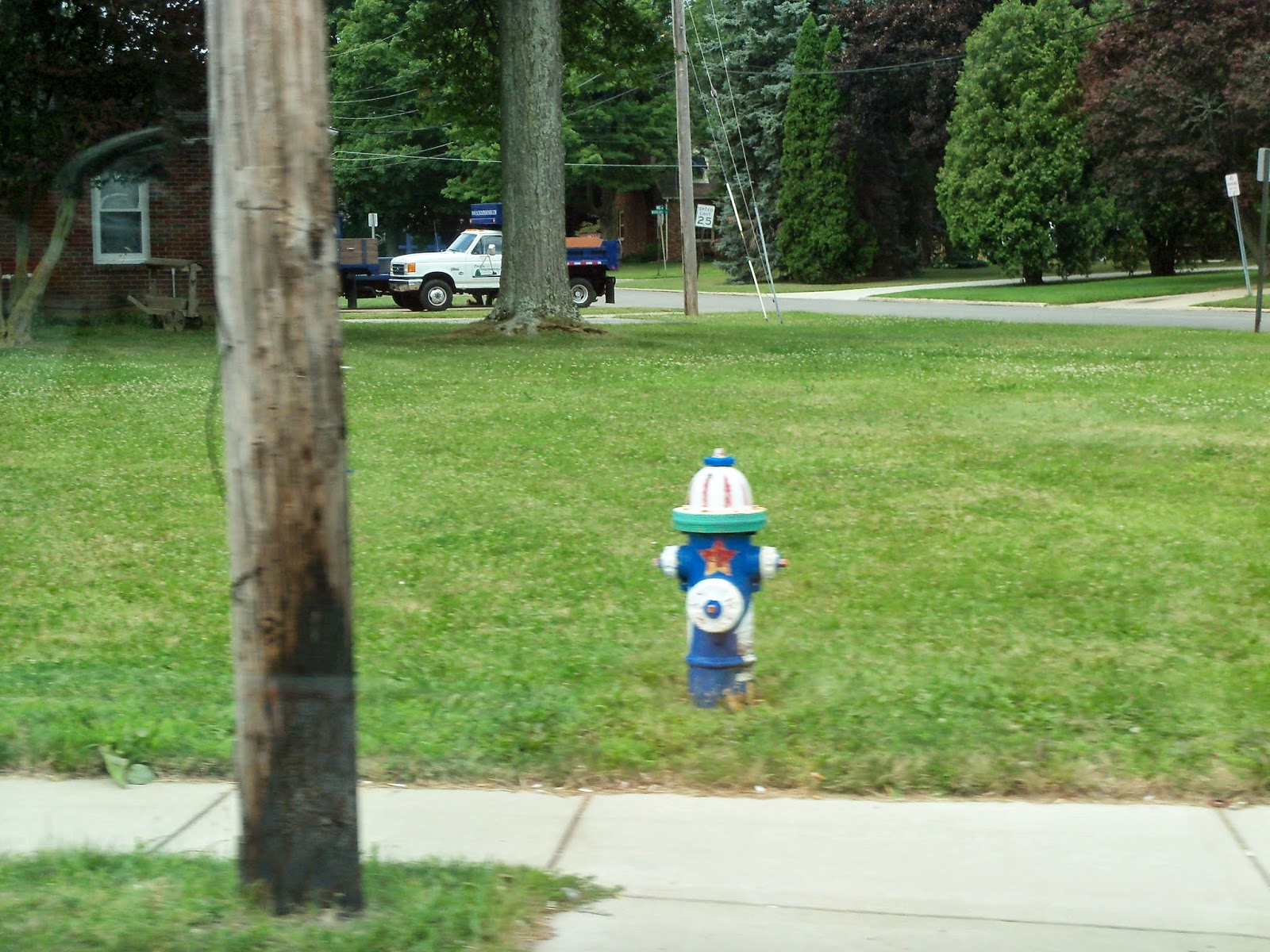
In 1975 the town of Xenia wanted to plug patriotism. Thanks to the artistry of both youths and adults participating in the "Paint a Plug For America" Project. Xenia is joining cities across the nation in the bicentennial project conceived by an Indiana woman, and by Independence Day, 1976, will have all its plugs redressed. Almost 40 years later many of the fire hydrants still have that Patriotic theme and it’s red, white and blue colors with their stars and stripes.

The Xenia Station is home to the largest paved trail hub in Ohio. The grounds are tucked alongside where Miami Avenue and Detroit Street (Rt. 68) meet in Xenia, Ohio in Greene County. The hub boasts about 170 miles of paved bikeways that connect directly to the station. These trails link to a number of different communities, as well as the nearby Dayton trail network, making this part of southwestern, Ohio very conducive to traveling by trail!

Just off Route 42, on Stevenson Road is Massies Creek. This is where you can see another one of the many covered bridges in Ohio. The Stevenson Road Covered Bridge over Massies
Creek on Stevenson Road (CR 76) was closed to traffic in 2003. It was built in 1877 by the Smith Bridge Company. It is 90 feet long, 16 feet wide and vertical clearance of 13 feet. After seeing this bridge, we headed into our overnight stay at Frontier Campgrounds in Waynesville, OH. Another great find from the Good Sam’s directory. Check back for the next part of our two lane adventure!


Heading West With No Destination In Mind - Part Three

 
We left the Kenisee Grand River Campground and headed west on Route 307. We turned south onto 534 and ran parallel with the Harpersfield Bridge. It is a covered bridge spanning the Grand River. It is a double-span Howe truss bridge, one of currently 16 drivable covered bridges in the county. It is the third longest covered bridge in Ohio at 228 feet. A flood in 1913 washed away the land at the north end of the bridge, and the steel span was subsequently attached. The bridge features a walkway, added during its renovation in 1991.
We passed through Windsor and saw many Amish and Mennonite families. A large Amish community exists in Northeast-Central Ohio. I love to go through any area where the Amish reside. I find it so amazing how they can maintain their simple lives with all the modern technology around. That is something that really fascinates me. I enjoy traveling behind a horse drawn buggy or seeing them parked near a modern store or gas pump.
We came into Mesopotamia (called Mespo by the locals) in Trumbull County. The Mespo area is home to the 4th largest old order Amish population in the world. While sitting in the gazebo or picnic shelter on the green, you will see Amish horses and buggies, ponies pulling small carts, and horses pulling open surreys. Amish families often gather at the End of the Commons General Store, in which one can find necessary kitchen staples as well as a deli counter, penny candy, books and gifts. The Amish participate with the “Yankees” in the annual Ox Roast and Fall Heritage Days.  Hopewell a Therapeutic Farm Community is located on a 300-acre farm in rural Mesopotamia, Ohio. They help adults with schizophrenia, schizoaffective disorder, bipolar disorder, major depression and other forms of serious mental illness. They believe that everyone can experience success, find a life of purpose and feel hope. Founded by Cleveland native, Clara Rankin, Hopewell accepted its first resident in 1996. Hopewell is one of a handful of therapeutic farm communities in the country and the only one of its kind in Ohio.
We went through West Farmington & Southington before turning west onto Ohio 303. Windham was a sleepy town but not too sleepy, it has two traffic lights, but no fast food restaurants. It had a Burger King, but it was closed and converted into a Pharmacy. When we came into Freedom, we saw out first Dollar General of the day and we have been on the road for a couple of hours already. Missing all the commercial stuff, is another great thing about taking these two lane adventures!
Streetsboro welcomed us. It is known as “The Gateway to Progress!” The town is situated within 40 minutes of Cleveland, Akron and Youngstown, and strategically located at the crossroads of 5 State Routes: Route 14, Route 43, Route 303, Route 480 and the Ohio Turnpike. Before it was Streetsboro, it was part of the Connecticut Western Reserve. Before settlers moved into the Connecticut Western Reserve, Seneca Indians traversed the area now called Streetsboro. They used Old Portage Trail, to go from Lake Erie to the Ohio River basin. The founder of Streetsboro was Titus Street.
This comment is for my friend, Patti Calandra … we went by S&S Aggregate. They sell washed sand. What happens when you wash sand? When I run water over sand, it disappears … it is one of those things that make you go hhmmmmm?! I wonder if washed sand is more expensive than dirty sand?
Entering the town of Hudson, the Clock Tower is easily one of the most recognizable landmarks in Summit County. The Clock Tower was a vision of James W. Ellsworth. Born in Hudson in 1849, Ellsworth was a well-known millionaire who made his money in banking. The 44 foot Hudson tower was built in a traditional Romanesque style. Fountains were built on the north and west side of the tower, one for humans and one for horses. Today the basins are used as flower pots. In 2010, the city was named as one of the 100 Best Communities for Young People by America's Promise. The award was based on the city's "Community First" organization that was developed to combat drug use, school dropouts and to promote better choices in the city's youth by providing additional educational and cultural opportunities. The Little Tikes Company was founded in 1970 and is still headquartered in Hudson. It has seen growth in recent years, and it's growth that is attributed in large part to the company's decision to manufacture more of its toys at its northeast Ohio plant instead of overseas.
Case-Barlow Farm is in Hudson too. It is a nonprofit corporation that purchased the famous homestead. The goal of the organization was to rescue the farm and surrounding historic buildings from demolition by a housing developer and securing the property for the future as an education and cultural center. Because of the melding of restoration and community use, this Farm has become a model for adaptive reuse. Today the Farm consists of a Farmhouse, Bank Barn, Carriage House, and miscellaneous outbuildings situated on 4 acres and surrounded by a 60-acre city-owned park called Barlow Farm Park. The Farm is listed on the Ohio Historical Inventory, has received recognition by the Hudson Historical Society and is designated as an official Underground Railroad site by the Friends of Freedom Society.
The Metro Park Bike & Hike Trail is located just outside Hudson. All 34 miles of the Bike & Hike trail are paved. It was one of the first "rails to trails" conversions in the country. It follows the course of the old Akron, Bedford & Cleveland (ABC) Railroad, which was the longest electric railroad of its kind when it was built in 1895. Until service was discontinued in 1932, riders could travel for 50 cents from Akron to Cleveland’s Public Square in a few hours. The Bike & Hike Trail parallels a scenic section of the Cuyahoga River where great blue herons, Canada geese and a variety of ducks can be seen. A small pond along the north side of the trail annually hosts a chorus of spring peepers. South of Boston Mills Road in Boston Heights, the Sharon Conglomerate rock walls of the Boston Ledges rise along the trail. Farther north, the trail travels along Brandywine Road and offers a view of Brandywine Falls which, at 65 feet, is one of the highest waterfalls in Ohio.
Brandywine Creek flows into the "bridal veil" cascades which form the start of the Brandywine Falls. It is within Cuyahoga Valley National Park. There are wooden paths leading down to the waterfalls viewing platform. An exhibit near the falls includes a photo of the waterfalls, a map of the area, and a cross-sectional drawing of the rock. The rock layers of the Brandywine Falls can be read like a book. Each chapter covers millions of years. The rocks at the base of the falls were formed more than 400 million years ago. The Cuyahoga Valley's waterfalls are among the most popular attractions in the national park. Brandywine Falls is the centerpiece of the park, but not its only source of interest. The Cuyohogue Valley National Park is a refuge for native plants and wildlife, and provides routes of discovery for visitors. The winding Cuyahoga River gives way to deep forests, rolling hills, and open farmlands. Walk or ride the Towpath Trail to follow the historic route of the Ohio & Erie Canal. Stop and see Beaver Marsh, Boston Store Visitor Center, the Canal Exploration Center, Everett Covered Bridge, the Frazee House, or Ritchie Ledges.
Trapp Family Farm is also in the Cuyohogue Valley National Forest. Mark Trapp, Emily Stefanak and his two horses, Doc and Dan, are working a 28 acre farm. They are greenhorn farmers trying to reconstitute a 19th century farmstead on federal land. They are in a 60-year lease through a government program aimed at bringing back family farms in the valley, using organic and environmentally sustainable methods. They grow organic vegetables, herbs and more. Over yonder, the cattle, chickens and hogs are rooting and pecking, growing into tasty meat while fertilizing the upper meadow with their droppings.
Back at the house, fresh eggs are sold out of a front porch icebox. The house was built in 1855, but there is no barn. Doc and Dan sleep in a big plastic tent the size of a garage. This farm is the 11th one to come back from the dead. At the end of the 19th century there were about 800 farms between Akron and Cleveland, many of which were in the 22-mile-long Cuyahoga Valley. By the middle of the 20th century, the farmers were gone, casualties of real estate developers and giant agribusinesses. The new farmers -- some part-time, some full-time -- are growing and raising a variety of farm staples, ranging from alfalfa and grapes to goats and Christmas trees. None of the farms are certified organic, but they are pesticide-free, and the farmers employ natural methods that are healthy for the land, animals and consumers.
The Ohio & Erie Canal Towpath Trail is a multi-purpose trail developed by the National Park Service, and is the major trail through Cuyahoga Valley National Park. This trail follows the route of the historic Ohio & Erie Canal, which connected the natural resources of the United States interior with its markets on the eastern seaboard. From the trail you can make connections to many of the natural and historic sites in the park and to other trails that intersect it along the way.
Outside of the town of Peninsula, there were signs that said “Quarry Swim.” There were gates that were locked. But the words quarry and swim peaked my interest. After more research, I discovered The Peninsula Quarry is a non-profit swim club nestled in the heart of the Cuyahoga Valley. With a relaxing atmosphere, the Quarry is the perfect place to cool off on a hot summer day! The Quarry is fed by a natural spring and the water is very clean and chlorine free!
Before we entered Richfield, we passed a very colorful redwood stained building. There were colorful flags and streamers close to the road. The sign indicated it was a Tibetan Buddhist Palyul Temple. Their mission is to preserve the teachings of the Buddha, and in particular the Palyul tradition. Palyul is one of the six mother monasteries of the Nyingma tradition of Tibetan Buddhism. It was founded in 1665 by Rigdzen Kunzang Sherab in Derge, on the eastern edge of Tibet.
In Richfield the Kelly Miller Circus, America's One Ring Wonder, was gearing up for their show later on Saturday July 26th. The big top was set up behind Richfield Village Town Hall on Main Street. Seeing this circus reminded me that Walker International Circus will be at the Hemlock Fairgrounds on Monday August 4th for two shows.
Outside of Richfield, we passed a great antique or trinket shop and another business that enjoyed showing off the old time signs. The exterior had many flowers, metal sculptures and creatures. There were no relatives to Maynard or Maudine, but it never hurts to look!
Leaving 303 west we turned south onto 42 in Medina. Stay tuned for part four of our two lane adventure!


Sunday, July 27, 2014

Heading West With No Destination In Mind - Part Two

20A merges into 20 West in Hamburg, New York. Route 20 closely parallels the Lake Erie shoreline, the New York Thruway and NY Route 5. In Irving, you find the Seneca Nation of New York, also known as the Seneca Nation of Indians. Irving is one of the tribe's two alternating capitals on the Cattaraugus Reservation. The Seneca Nation has several gas stations selling gas for $3.199 per gallon. Too bad we filled up about 10 miles before these stations!

We followed a portion of the Great Lakes Seaway Trail, where Routes 5 & 20W joined. The entire trail is 518 miles long and consists of a series of designated roads and highways that travel along the Saint Lawrence Seaway specifically, Lake Erie, the Niagara River, Lake Ontario, and the Saint Lawrence River. If you enjoy the water and lighthouses, it is a great trip!

In Silver Creek, is the Family Home of Howard Ehmeke. He was a famous baseball player. He pitched for Silver Creek High School and in the Major Leagues for Detroit, Boston and Philadelphia. He was on the winning team, the Philadelphia Athletics, for the 1929 World Series. On April 15, 1927, Howard Ehmke gave up the first of Babe Ruth's 60 home runs while pitching for the Philadelphia A's.

Route 20 W follows along the Chautauqua Wine Trail. I was very surprised at the number of vineyards along this route. Some of the vineyards stretch as far as the eye can see. The Chautauqua Wine Trail has twelve wineries that produce wines including vinifera, ice wines, fruit wines, and specialty wines.

Fredonia is home to State University of New York at Fredonia. It is a four-year comprehensive, public, liberal arts college, known for bachelor's degree programs in music and education. Fredonia is also where in 1821,
William Hart dug the first well specifically to produce natural gas in the United States on the banks of Canadaway Creek in Chautauqua County, New York. It was 27 feet deep, excavated with shovels by hand, and its gas pipeline was hollowed out logs sealed with tar and rags. It supplied enough natural gas for lights in two stores, two shops and a grist mill (currently the village's Fire Station) by 1825. Expanding on Hart's work, the Fredonia Gas Light Company was eventually formed in 1858, becoming the first American natural gas company. The site of the first gas well is marked by a stone monument in downtown Fredonia.

Brockton, the name was derived by combining the names "Brockway" and "Minton," two prominent local families. Brocton Arch is a historic "welcome arch" located at the intersection of Main Street. It is a freestanding steel arch bearing the community's name constructed in 1913 over a public thoroughfare. It is a rare double span, four way street arch. It was listed on the National Register of Historic Places in 1996. In 2012, it was taken down to be refurbished.

In Portland, you will find Brix 21 Vineyard and Winery. It is one of the newest wineries in Lake Erie Wine Country. Nestled between the vineyards and cherry orchards of Olde Chautauqua Farms and near the shoreline of Lake Erie, the winery is one of the largest in the region. Boasting a sixty foot tasting bar, a retail area and ample indoor seating area. 21 Brix Winery is the perfect location to host a private event or to just spend an afternoon sampling wines and enjoying the landscape. Every Sunday in August you can enjoy Sippin Sundays.
Why is there an elephant at Brix 21? The elephant was originally part of Molly Brown’s, which was a family fun business in Jamestown. When it closed, a gentleman living in the town purchased the elephant. A few years later, 21 Brix Winery purchased it and placed it on Route 20 to show the entrance to the farm’s U-Pick Cherry Orchard. It's a long stretch of Route 20 between Brocton and Westfield, the elephant was moved across the street, since there was no road side sign for the winery.  She was named Ella and people were told to look for the elephant. She became a mascot at the winery and has several wines named after her. Rumor has it, she sneaks into the winery after hours to help herself! She has been welcoming wine enthusiasts to the winery since 2011. Ella was painted pink in April 2012 for celebrate our release of our Pink Catawba wine, named Ellatawba. 

Westfield is the home of Grace Bedell. There is a statue of her and Abe Lincoln in Westfield. On October 15, 1860, a few weeks before Lincoln was elected President of the United States, Grace Bedell sent him a letter, urging him to grow a beard to improve his appearance. Lincoln responded in a letter on October 19, 1860, making no promises. However, within a month, he grew a full beard.

Grapes have been grown at Johnson Estate for well over a century. The winery, established in 1961, is the oldest estate winery in New York State. All of the European and American grapes used to make the estate wines are grown within 3000 feet of the winery and the grape varieties have been selected for their excellent wine-making quality and suitability for the Lake Erie microclimate. Also in Westfield, we came across my name sake, Timmerman's Fruit Stand. Timmerman is my mother's maiden name. It made me smile to think about my mother and her family history.

Ripley is one of the towns of the "Grape Belt" of Chautauqua county. Ripley's 31,110 acres are largely devoted to the grape industry, and in the village of Ripley the Randall Grape Juice Company is located, one of its most important industries. Ripley is a station on the New York Central railroad, the Lake Shore & Michigan Central also passing through the town, following the lake shore. One of the natural features of the town is Johnson's Falls, a spot of great natural beauty.

Sensory Winery and Art Gallery is a contemporary, abstract gallery that produces small-lot highly blended cult wines (only 45 cases per label) that cannot be found anywhere else. The vision for sensory winery and art gallery is to join the perception of our senses into one location. Through visual-art works; taste-and-smell wines; sound, music, and video commentary (and touch-a blend of steel, concrete, and wood in the retail facility) Sensory Winery seeks to deliver an appreciation for the arts. The wine, like the artwork, is constantly changing. 

We entered Pennsylvania and came into historic North East, the heart of grape country. Fruit growing was an early economic endeavor, and is still to this day, as this is a popular area for especially cherries and grapes. Additionally the town has a very strong industrial base with several food service and manufacturing companies providing jobs and revenue for the area. The two volunteer fire companies that serve the Borough and Township hold an annual Cherry Festival in July and an annual Wine Country Festival in September.

Through Harbor Creek and Wesleyville, into Erie. Erie has a Wegmans! Being From Rochester, New York it warms my heart to see a local business that has made it big! Wegmans has been a fixture in Rochester since 1916. It has expanded into five other states, besides New York. It still takes care of it's employees like most companies did in days gone by. Meadow Brook milk has processing facility located in Erie and the Sigsbee Reservoir, which holds 33 million gallons. The Caretaker's house at the Sigsbee Reservoir is on West 26th St, a sight common to many drivers on this busy East West thoroughfare, it has been well maintained by the Erie Waterworks, although there has not been a caretaker in residence for many years.

We entered Ohio on Route 20, and traveled on the eastern section of the Lake Erie Coastal Ohio Trail. If you drove the entire trail, it would take 8 hours and at least 3 or 4 days to enjoy all of the sights!

We traveled through Conneaut on 20 W. It is a town along Lake Erie at the mouth of Conneaut Creek. The creek is the number one steelhead trout stream in the country. Conneaut is located on an old Native American trail, later used by early westbound pioneers. The word conneaut comes from the Seneca language. Conneaut Township Park is a great place to stop and enjoy the trails and beach on the shores of Lake Erie.

Ashtabula County in Ohio is home to many covered bridges. We passed one on our way to our overnight stop. We were traveling south on Route 11 and the Smolen-Gulf bridge is located on State Road (County Road #25) in Plymouth. It is the longest covered bridge in the US at 613 feet. There are five foot wide covered walkway on each side of the bridge. It boasts a clearance width of 30 feet and a clearance height of 14 feet. It stands 93 feet above the Ashtabula River. The bridge supports full legal loads, including 80,000 pound tractor-trailer traffic. The life expectancy of the bridge is over 100 years. Ashtabula County holds an annual Covered Bridge Festival each October to honor the 18 covered bridges in the area. You can give your self a tour of these covered bridges by following the guide they have created. You can download this guide, by following this link. They also have a Facebook page, if you enjoy covered bridges, become a FB fan.

We followed Route 11 south to 307 west to Kenisee's Grand River Camp in Geneva, Ohio. It was a great find, for not planning and looking in the Good Sam directory for a Friday night spot! It had several full hook-up pull thru graveled sites overlooking one of their many ponds. It was only $30 for a weekend night, the Good Sam rate. We were parked next to a Good Sam Chapter from Ohio, the "Hot Seat Sams" were enjoying a weekend of camping. We walked most of the park and found many friendly campers. We are ready to relax for the night and continue our two lane adventure in the morning.